Poem of the Week, by Richard Wilbur
 When it came to homework, I was kind of a hands-off mother, a mother whose life –and whose children’s lives– became instantly better when I made the decision to quit checking the portal. (The portal. The portal. The portal of hell.) My children never asked me to look at or edit their papers, so I didn’t, and when it came to math, I couldn’t help them anyway. But my youngest daughter preferred to do her homework, especially essay assignments, at the dining table when I was working. She would write her papers, I would write my stories. This daughter works best with solid blocks of time, earbuds in and playlist on, while her mother at the other end of the table twitches and rocks and grinds her teeth, trying trying trying to get the words out. My sleek iridescent child, my clattering commotion of keys. This poem feels as if it came straight out of my own heart.
The Writer, by Richard Wilbur
In her room at the prow of the house
where light breaks, and the windows are tossed with linden,
my daughter is writing a story.
I pause in the stairwell, hearing
from her shut door a commotion of typewriter-keys
like a chain hauled over a gunwale.
Young as she is, the stuff
of her life is a great cargo, and some of it heavy:
I wish her a lucky passage.
But now it is she who pauses,
as if to reject my thought and its easy figure.
A stillness greatens, in which
the whole house seems to be thinking,
and then she is at it again with a bunched clamor
of strokes, and again is silent.
I remember the dazed starling
which was trapped in that very room, two years ago;
how we stole in, lifted a sash
and retreated, not to affright it;
and how for a helpless hour, through the crack of the door,
we watched the sleek, wild, dark
and iridescent creature
batter against the brilliance, drop like a glove
to the hard floor, or the desk-top,
and wait then, humped and bloody,
for the wits to try it again; and how our spirits
rose when, suddenly sure,
it lifted off from a chair-back,
beating a smooth course for the right window
and clearing the sill of the world.
It is always a matter, my darling,
of life or death, as I had forgotten. I wish
what I wished you before, but harder.
For more information on Richard Wilbur, please click here.
Website
Blog
Facebook page
@alisonmcghee
 Once I had a friend who shared my love of strong flavors. We would buy things like kimchee and Limburger cheese and pesto that was mostly garlic and sit at the small kitchen table in the 4th-floor walkup I shared with my sister eating it. You two and your stinky food!, my sister would say, and she was right. Intensity is a good thing when it comes to food. And gin, the kind where you can taste all the plants and flowers and life that’s been infused into it: bay and juniper and sage, dry sunshine air. “Whatever’s your most botanical,” is what I say to the bartender when they ask. I don’t care if there’s a heaven and I don’t believe anyone who tells me there are rules for getting into it, because why does it matter? This is the world we live in. This is our hell and our heaven, this world right here, the one with the Limburger and the pesto and the St. George terroir. Which is why I love this poem, by the great Kim Addonizio, a woman who has never been afraid of strong flavors.
 This poem keeps drawing me to it, or it to me, and I don’t know why. The last two lines come back to me when I wake up at night, or sometimes when I’ve been walking or hiking for a long time. I don’t know where I found this poem, or where it found me. Sometimes when I read it, the hard times, I feel like a child who doesn’t know what she did wrong, why she’s being yelled at, a child who would do anything to be better and to make it better. Other times I feel a huge relief, a letting-go, as though the you in the poem, in the ending three lines, has finally found me and I don’t have to keep trying anymore.
 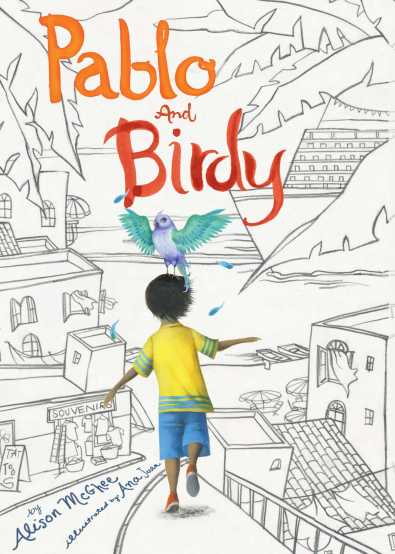 me, belonging, and identity (that) smoothly incorporates elements of magical realism and powerful allusions to the refugee experience.”
  Once, at the end of a book club discussion held in the library of a women’s prison, the women (who are addressed as “offenders” on the prison P.A. system, as in, “Offenders, cell check in fifteen minutes”) took turns asking me personal questions from a list they had prepared. I remember only one of them: “
 When we were little my sisters and I used to press leaves and flowers between the tissuey pages of our big dictionary and then forget about them. They could still be in there, for all I know, wherever that big gray dictionary is now. Once in a while, inching along the rows of a used bookstore, I come across my own books on the M shelves. Sometimes I slide one out to read the dedication and the acknowledgments. They are reminders of where I was at that point in life. Most of the people I loved then I still love, although a few have fallen away or crossed over to that other world. Some of those books contain an inscription written at the request of a patient person who waited in line, book in hand, so that it could be personalized for them: To Cornelia on her birthday, with many happy returns, Alison. Once in a while I do recognize a name, or a nickname —To the one and only Booberry, with tons of love. My handwriting looks different in that case, lively and familiar and happy, if handwriting can look happy. Who knows how the book ended up here on this shelf, the hands it must have passed through.
 Six saggy old cardboard boxes full of hundreds, maybe thousands, of handwritten or typed letters sit behind closed cupboard doors in my bedroom. These letters date back to high school. They’re from my mother, my grandmothers, my sisters, my brother, boys and men I loved, my best friend, other dear friends, and friends I barely remember but who were important to me at one point in my life. The envelopes, with those wavy lines across the canceled stamps, bear testament to all the places I’ve lived in my life. Unlike almost anything else in my life, I can’t throw them out. Sometimes they have lived in the dark trunk of my car until once again they are hauled into a different cupboard in a new house or apartment, where they rest in darkness next to their neighbors. The other day I opened a box at random and pulled out a letter from my grandmother. She had been to a movie with my parents and what an interesting, if confusing, movie it had been. Afterward they had gone to a Chinese buffet and my parents had treated her, how lovely of them. She was having trouble with that darned knee of hers. And then came this ending line, reminiscing about my grandfather, dead many years at this point: What a beautiful life we had together, but it wasn’t long enough. My grandmother, and that single, uncharacteristic sentence from her, written in the shaky Palmer script of her very old age, is why I love this poem so much.
 When I was 20 I flew to Taipei with a plane ticket and the hope of finding a place to live and somewhere to study Chinese. I took a cab to a hotel, where I stayed for three days, mostly in the tall narrow box of a bathtub, too scared and lonely and unsure of everything to venture out. Starvation finally drove me down to the lobby. I said, having practiced it over and over, “Wo e si le. Fanguan zai nali?” which translates as “I’m dying of hunger. Where is a restaurant?” The three glasses-wearing Chinese men behind the counter leapt up with cries of concern, led me outside and pointed across the street. Once there I scanned the menu, scrawled on long tendrils of paper pinned to the walls, until I recognized the two characters for potstickers. I ordered 16, at a penny apiece, and ate them all. Those potstickers live in memory, visceral memory, like everything Adrienne Su describes in her wonderful poem below. I still dream about them.
  Last week the painter had a dream in which an old friend, dead in an instant two years ago now, appeared, smiling and so happy to see him. Do you think he came back because he died so fast and he wanted to say goodbye to you? I asked him when he told me about the dream. Who knows? Maybe, the painter said. Either way it was good to see him, happy and healthy. W.S. Merwin has always been a poet of dreams to me, what with his imagery and the way his unpunctuated poems float on the page. His calm voice drifts across the water, and sometimes one of his poems feels exactly right.
 Alison McGhee