Poem of the Week, by William Butler Yeats
 This was back in the days of dial-up modems with their squealy screechy sounds. The first line of the first review of my first novel came shimmering up on that clunky old computer screen: “First time novelist tries but fails to move or matter.”
“Or matter.”
I sat staring at the screen, my little kids looking at me silent and troubled, knowing something was wrong. I turned to them and smiled. I laughed about the review, pretended I didn’t care. But the photo above is what I typed into my journal that night.
This is not a story about a writer who got a bad review – all writers get bad reviews. Nor is it a story about a plucky young woman whose novel went on to win a bunch of awards so haha. It’s a tiny story that stands in for a much larger story of casual, ongoing cruelty in a world in which those two words –or matter–should never be written by a human being about another human being.
Those two words broke something in me a long time ago that can’t be fixed. That’s what cruelty does. When judgment rears its ugly head inside me, as it does way too often, I recite the last two lines of this poem to myself.
He Wishes for the Cloths of Heaven, by William Butler Yeats
Had I the heavens’ embroidered cloths,
enwrought with golden and silver light,
the blue and the dim and the dark cloths
of night and light and the half-light,
I would spread the cloths under your feet:
But I, being poor, have only my dreams;
I have spread my dreams under your feet;
tread softly because you tread on my dreams.
For more information on Yeats, please click here.
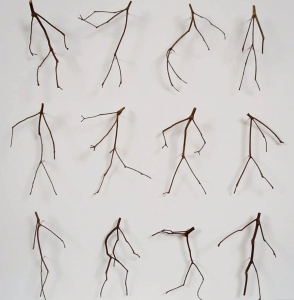 Everything physical, everything specific: the sharp scent of the woods that night in the Adirondacks when the rain drummed down on the canvas tent. The cold clear water that dazzled your body when you plummeted from the rope swing. The softness of the loam under your boots that cold dawn hike in Vermont.
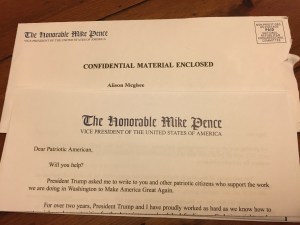 Last fall I began getting letters like this from the president, the vice-president, the NRA, anti-abortion organizations. Not my typical mail. Why me? Then it came to me: in August a friend died, a Marine combat veteran, and in his honor I made a donation to the Wounded Warrior project, which must have triggered a hundred conservative mailing lists.
 Last summer, driving to Vermont, I detoured past my grandparents’ dairy farm. That’s how I think of it –their farm, on McGhee Hill Road–even though it’s been almost half a century since it changed hands, bought by city dwellers who turned the barn into a house and the house into guest quarters.
  Who am I? What is my place in this world? How do I stay steady and strong and never stop trying to help the world? Our burning planet. The onrush of artificial intelligence. This heedless erosion of democracy. These are my three biggest panics.
  Once, when he was about eight, my son looked up at me and said, “Mama, what if we’re all characters in a book, and someone is writing us right now?”
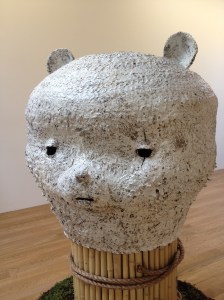 How I first found this poem is lost to me –was it in one of my grandmother’s huge and heavy high school English anthologies?–but it stunned me. I remember laboriously copying it word by word, line by line, complete with the strange little marks I would later learn were scansion, into my diary.
  The summer I turned nineteen I took the bus west to Wisconsin, to work at a mom and pop resort where the owners housed us in a firetrap and fed us leavings from the guests’ plates.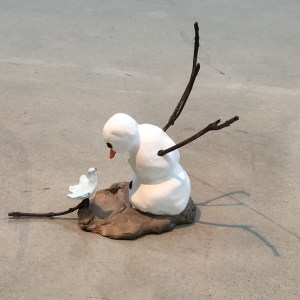
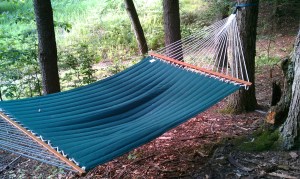
 Years ago I bought some raw land on a slope in Vermont. Hired someone to grade a tiny cleared patch in the woods. Drilled a well. Bought a one-room cabin kit off eBay and hired a carpenter to put it together. Spent many days and nights staring up from the porch and the hammock at the enormously tall pines pictured to the right.
  Alison McGhee