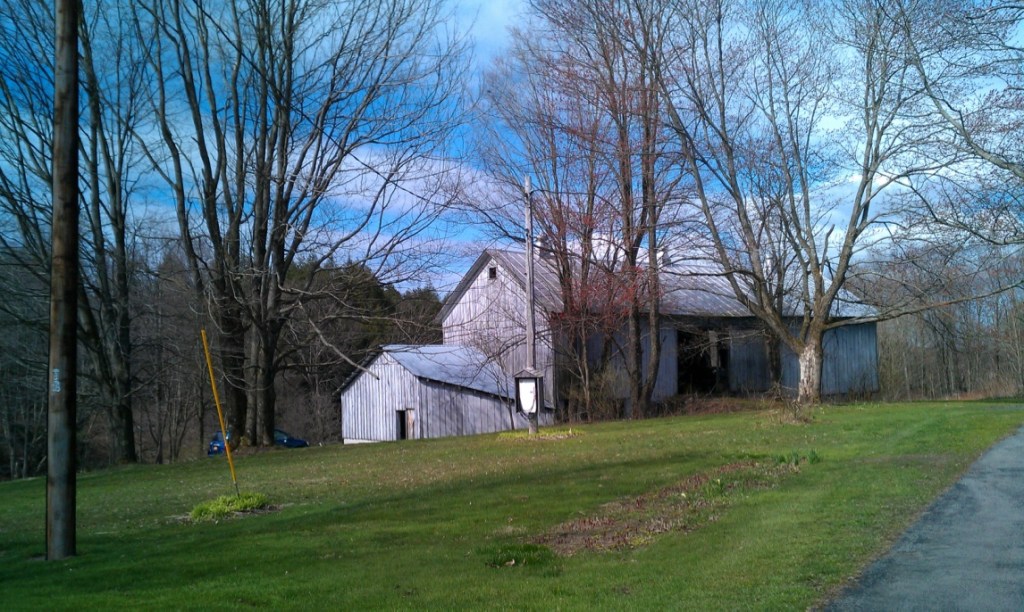
At sixteen I would get up at dawn, pick bag after bag of sweet corn, load it into the back of the pickup, drive it up to Route 12 and sit there with a Sweet Corn for Sale sign. Lots of people headed to the Adirondacks would pull over. Most were nice, but a few viewed me with what now feels like disdain.
“Is it fresh?”
“I just picked it.”
They’d grab a few ears and yank down the top, inspecting for…what? Those people never bought the ears they stripped. All these years later I think of them when I contemplate our country’s vast political divide. I grew up in a deeply rural place where liberals are often ridiculed, and now I live in a place where liberals often ridicule the people I came from. Either way, it’s wrong.
Who Burns for the Perfection of Paper, by Martin Espada
At sixteen, I worked after high school hours
at a printing plant
that manufactured legal pads:
Yellow paper
stacked seven feet high
and leaning
as I slipped cardboard
between the pages,
then brushed red glue
up and down the stack.
No gloves: fingertips required
for the perfection of paper,
smoothing the exact rectangle.
Sluggish by 9 PM, the hands
would slide along suddenly sharp paper,
and gather slits thinner than the crevices
of the skin, hidden.
The glue would sting,
hands oozing
till both palms burned
at the punch clock.
Ten years later, in law school,
I knew that every legal pad
was glued with the sting of hidden cuts,
that every open law book
was a pair of hands
upturned and burning.
Click here to learn more about Martín Espada. “Who Burns for the Perfection of Paper” is from City of Coughing and Dead Radiators, W. W. Norton, 1993
alisonmcghee.com
My podcast: Words by Winter
 Alison McGhee
Love it! It is always the lines of people and energy behind everything that gives energy. Oh, and “peel back” to see the size, color, and crispness of the kernels, while also checking for worms and other parasites. And I always bought those I had peeled back because I knew they were good!
LikeLike